

The Hillary School Project
A growing space built for an extraordinary place.
The initial project centers on a 42-foot solar geodesic Growing Dome for the Sir Edmund Hillary School in Khumjung Village, Solukhumbu, Nepal.
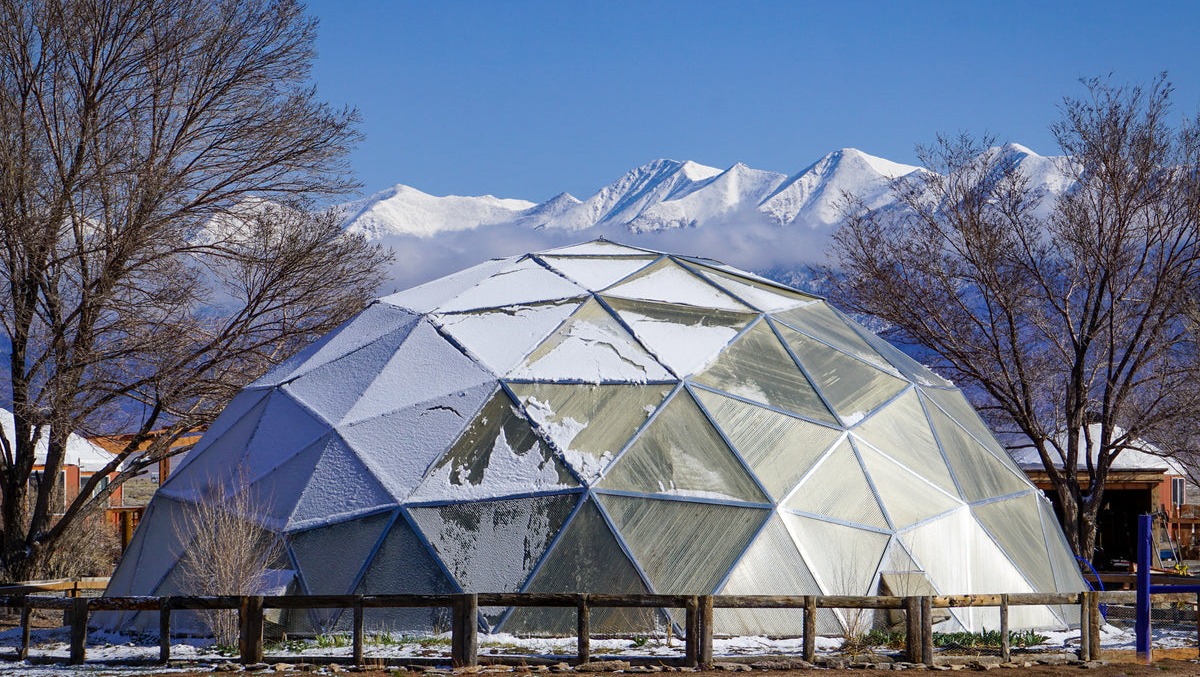
The setting
Why a Growing Dome matters here.
Khumjung and nearby Khunde are remote high-mountain communities. Local agriculture is resilient but limited by elevation, climate, transportation, and crop diversity. The project is designed to strengthen what already exists, not replace local knowledge or decision-making.
High elevation
Khumjung sits at roughly 12,430 feet in a cold, high-altitude environment near Mount Everest.
Short growing season
Traditional outdoor agriculture is constrained to about 100 days and is heavily centered on potatoes.
No road access
Food and supplies travel by foot, pack animal, or helicopter, increasing cost and limiting reliable access.
School stability
Greater food variety can support the school hostel, staff retention, student nutrition, and practical learning.
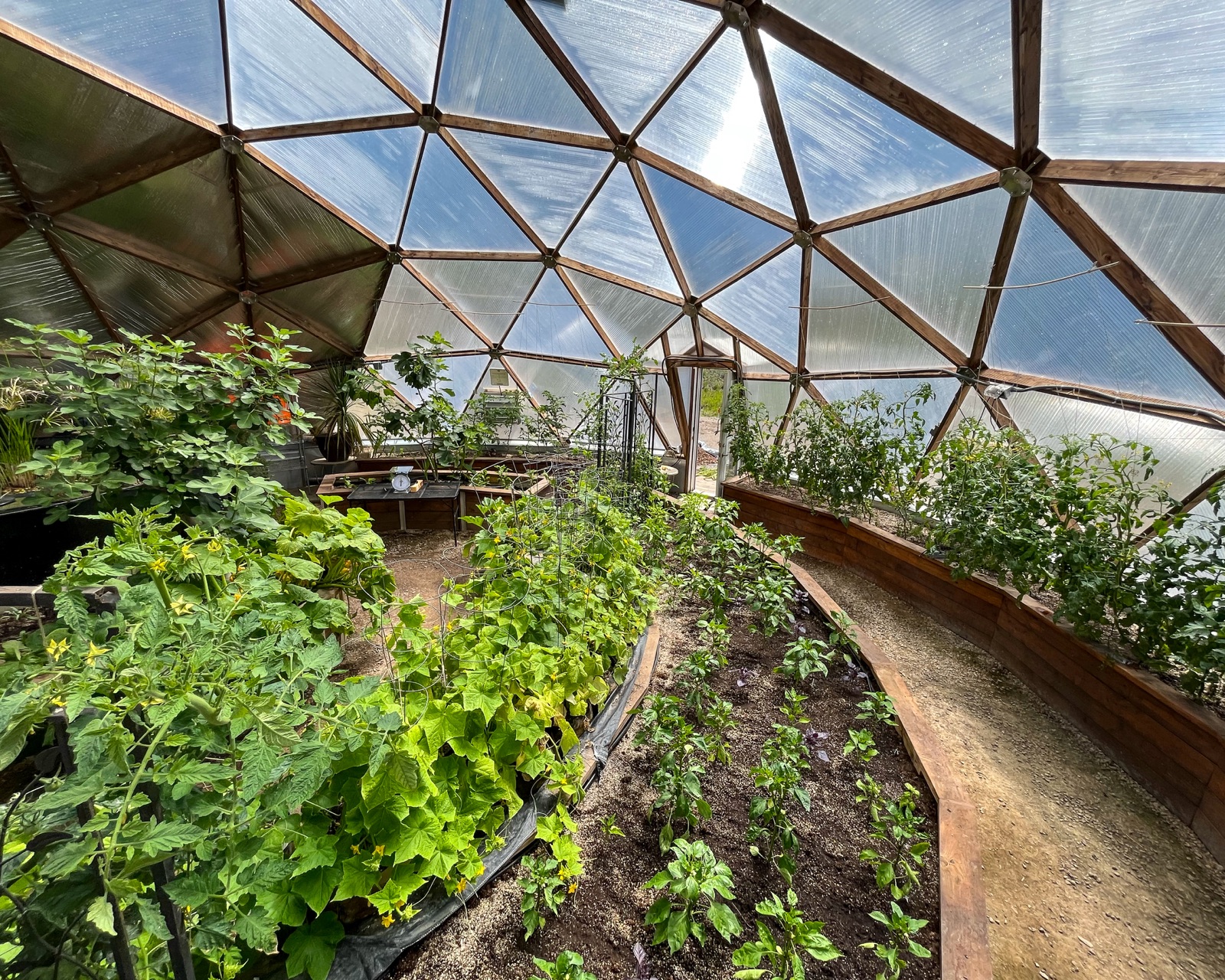
The proposed growing system
More than a greenhouse kit.
The structure creates a protected microclimate, but the full project also includes site preparation, transportation, interior growing systems, training, operating support, educational integration, and a locally led transition plan.
Passive solar design
A geodesic structure designed to capture and retain solar energy while creating a protected growing environment.
Kit-based construction
Prefabricated components can be transported in stages and assembled with local labor and technical guidance.
Custom growing plan
Raised beds, soil, crop selection, water systems, and operating practices can be designed around local goals.
Training and transition
The project includes knowledge transfer so school and community leaders can operate and maintain the dome locally.
From concept to cultivation
The project journey.
Delivery to Khumjung is an ascent in every sense. Each stage depends on careful coordination, cultural alignment, technical preparation, and sustained partnership.
01
Community alignment
Confirm priorities with school leadership, community elders, project partners, and local stakeholders.
02
Design and site preparation
Finalize the dome configuration, growing plan, foundation needs, utilities, and site logistics.
03
Fabrication and transport
Move the dome system and supporting materials from the United States to Nepal, then up the Khumbu Valley.
04
Local construction
Assemble the structure with local labor, project supervision, and locally sourced materials where practical.
05
Activation and training
Install beds and growing systems, begin planting, train operators, and connect the dome to school programming.
06
Learning and replication
Measure results, refine the model, and share knowledge with other remote communities across Nepal and the Himalaya.
What support makes possible
A complete, operating project.
Growing Dome materials and specialized systems
Site assessment, preparation, and local construction materials
International and high-altitude transportation logistics
Technical supervision and local assembly labor
Planter beds, soil, seeds, water, and crop planning
Training, educational activation, and early operating support
Project budgets and schedules evolve.
The original foundation site documents the early project plan. Contact the foundation for the current budget, technical scope, sponsorship opportunities, and next confirmed milestones.